“My Life in Art”: A Conversation with Master Artist Héctor Cruz at Galería EXU
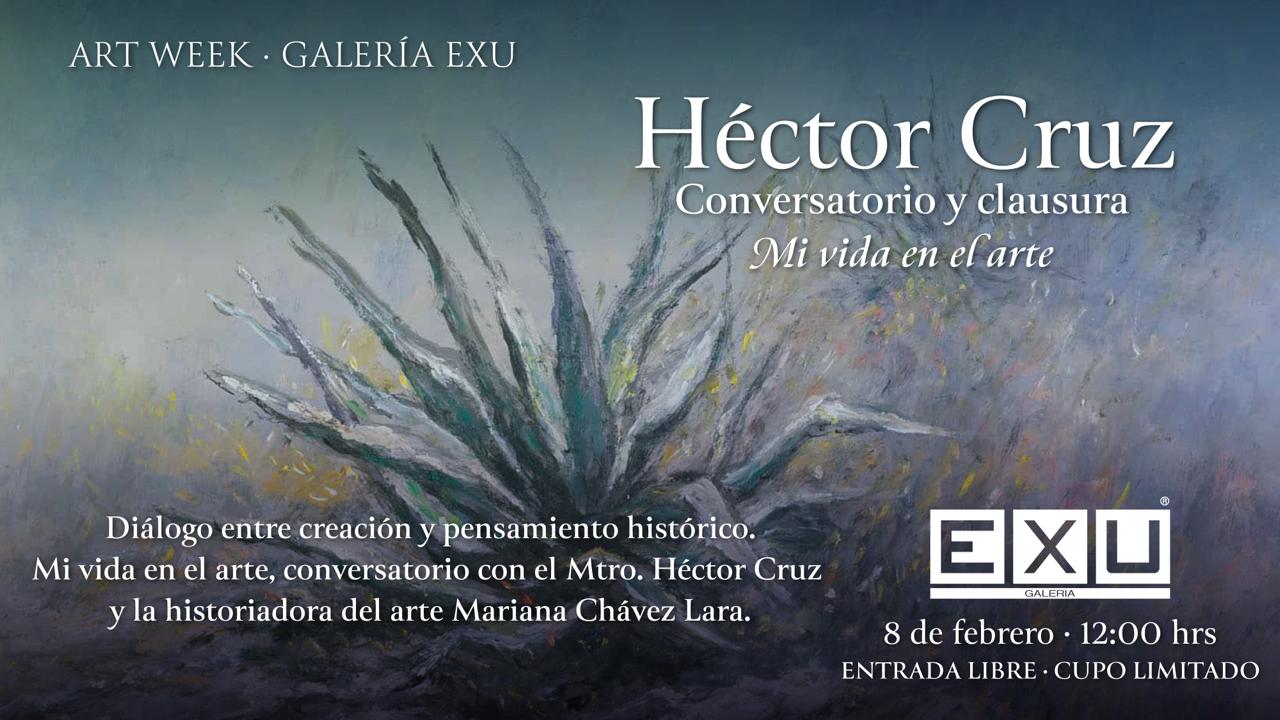
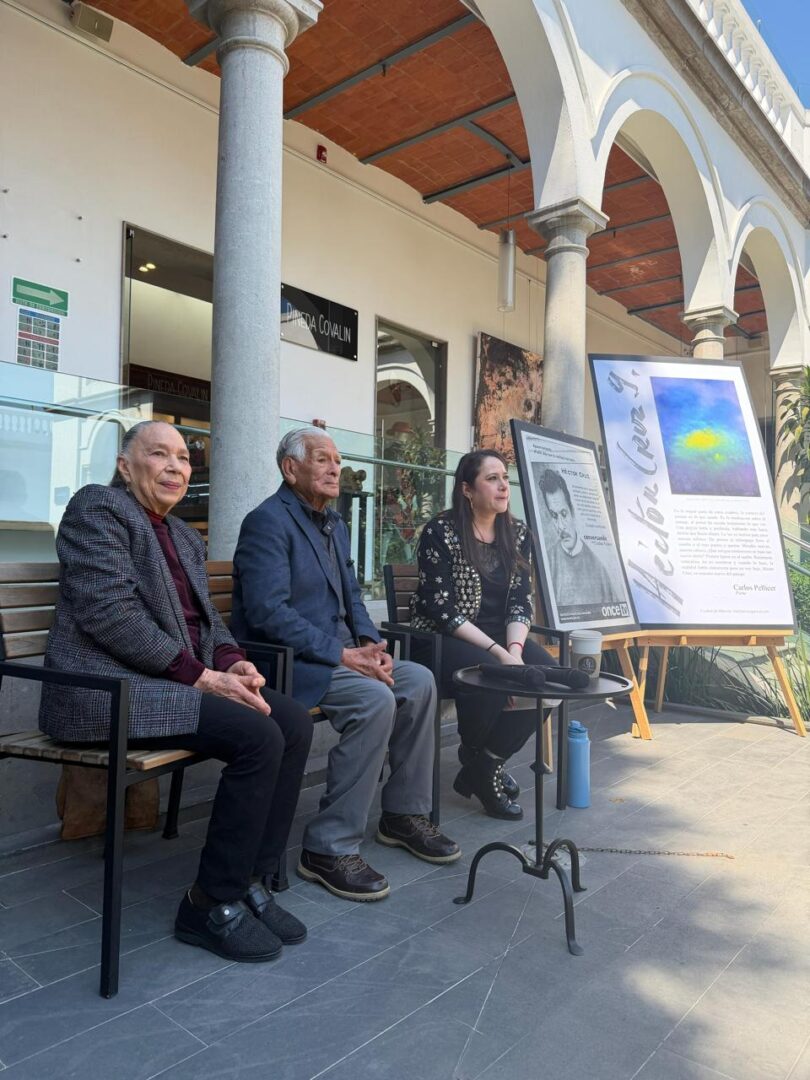
To mark the conclusion of Art Week at Galería EXU × Villa San Jacinto, we had the honor of presenting the talk “My Life in Art” (Mi vida en el arte). This encounter was dedicated to the trajectory, experience, and voice of Maestro Héctor Cruz García, a fundamental figure whose life has been deeply intertwined with art as a practice, a philosophy, and a destiny.
More than just a lecture, this conversation served as a significant pause within our programming: a moment to listen to someone who has inhabited art not only as a discipline but as a way of being in the world. Discussing a life in art, in this context, meant more than just reviewing milestones or achievements; it opened a space to share a journey built on constant labor, pivotal decisions, creative searches, doubts, discoveries, and a profound fidelity to the craft.
Born in Chimalhuacán in 1932, Maestro Héctor Cruz is a painter, muralist, and sculptor with over half a century of experience. His artistic development spans key moments of Mexican modern art: from his time at La Esmeralda to his proximity to the languages of muralism and plastic integration, ultimately forging a unique voice that has evolved over time without losing its consistency or depth.
His vast and diverse body of work stands as a testament to a sustained practice and a permanent commitment to artistic creation. Within it, one perceives not only technical mastery but also a sensitive understanding of material, space, and the image as a vehicle for thought. Maestro Héctor Cruz’s trajectory is that of an artist who has maintained a living relationship with his work, allowing experience, time, and reflection to integrate naturally into his visual language.
However, his legacy is not limited to his artistic production. Throughout his life, the Maestro has also been a mentor to generations of artists, sharing not only technical tools but an ethical, rigorous, and sensitive way of understanding art. In this sense, his presence has been invaluable both inside and outside the studio: as a creator, but also as a guide and a point of reference.
The conversation was moderated by Mariana Chávez-Lara, an art historian, cultural manager, and professional musician, whose participation allowed the encounter to be guided by a perspective that balanced history, sensitivity, and the lived experience of art. Her accompaniment helped weave a close and reflective dialogue, allowing the audience to approach the human and artistic dimensions of Maestro Héctor Cruz.
Far from offering closed answers, “My Life in Art” raised necessary questions about what it means to dedicate an entire lifetime to creation. It touched upon how an artistic practice is sustained over time—even when no one is watching—and what it implies to keep choosing art over and over again, every day, through silent work, discipline, and conviction.
At Galería EXU, we extend our deepest gratitude to Maestro Héctor Cruz for sharing his words, his experience, and his journey with us, as well as to Mariana Chávez-Lara for guiding this dialogue with such intelligence and sensitivity. This conversation was, undoubtedly, a memorable closing for our Art Week programming and an invaluable opportunity to remember that art is not only produced: it is also transmitted, reflected upon, and lived.